Food service shuts down more businesses than almost any other entrepreneurial sector. The difference between those that close and those that thrive isn't usually the dish — it's running the numbers before signing the lease. Here's a complete analysis of a real restaurant in Palermo, with sector figures and conclusions you can replicate.
The project: Italian cuisine in Palermo
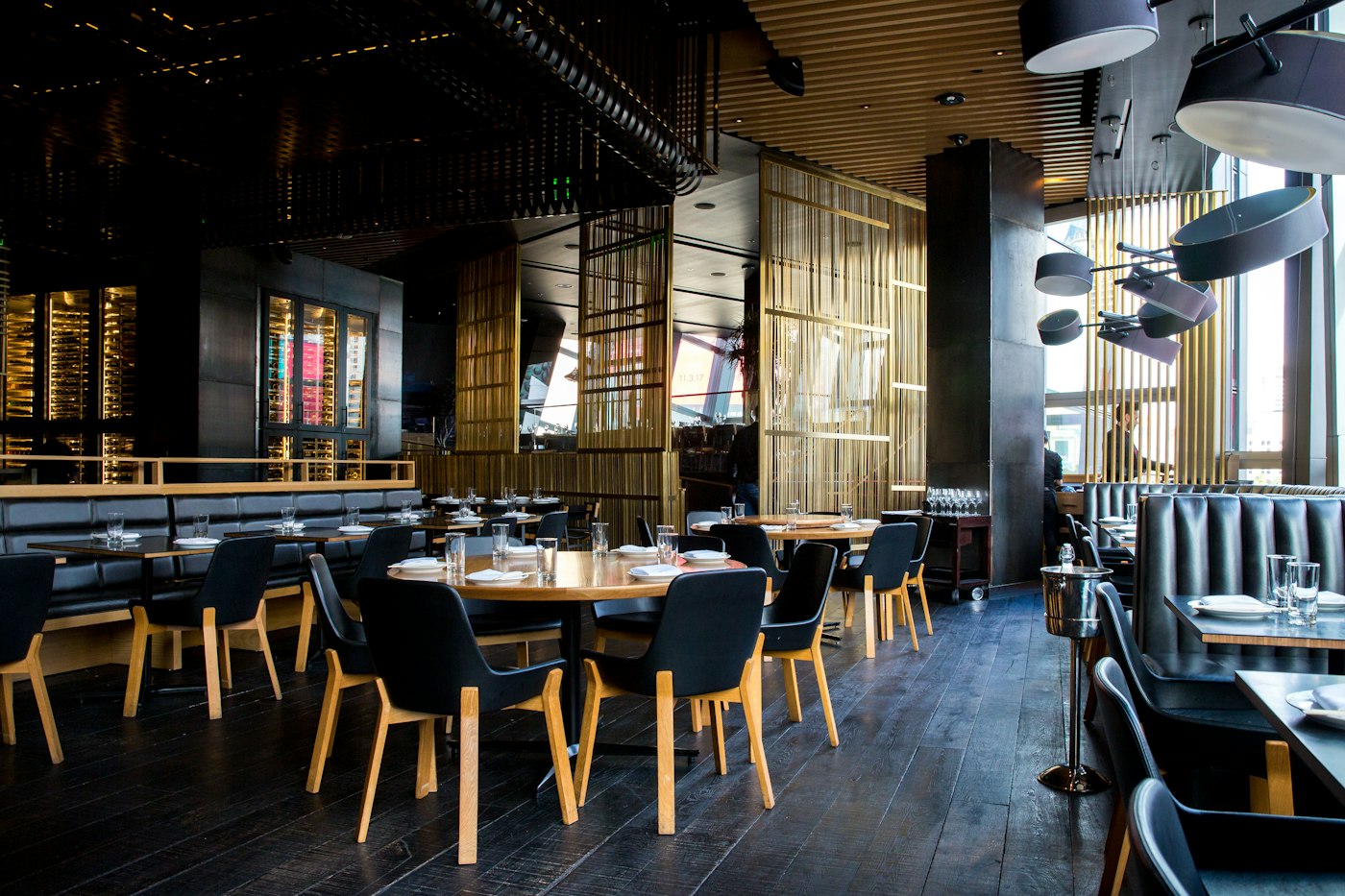
We worked with a real case (numbers adjusted for confidentiality). 60-seat restaurant in Palermo, Buenos Aires. Contemporary Italian cuisine. Average ticket $85. Lunch and dinner Tuesday through Sunday. Initial investment: $48,000 in renovation, equipment, and licensing.
We applied the Blank & Tarquin (Engineering Economy, 8th edition) methodology — the same one Factibilidad.io uses — to evaluate whether this business adds up before committing to the lease.
Replicate this analysis for your own food-service project →Model assumptions
| Variable | Base assumption |
|---|---|
| Average ticket (per cover) | $85 |
| Covers per service (start) | 30 of 60 |
| Services per day | 2 (lunch + dinner) |
| Operating days per month | 26 |
| Occupancy year 1 | 50% |
| Occupancy year 2+ | 70% |
| Food cost | 32% of revenue |
| Monthly fixed costs (rent, salaries, utilities) | $18,000 |
| Total initial investment | $48,000 |
| MARR (minimum required rate) | 35% per year |
| Analysis horizon | 5 years |
| Implicit inflation | Not modeled — all in constant currency |
About the 35% MARR. In high-inflation economies, with bank deposits at 30–40% and real entrepreneurial risk, a MARR below that band gives artificially positive results. Any analysis using 15% for high-inflation food service is noise.
Building the cash flows
Monthly revenue — year 1
Revenue = Covers × Ticket × Services/day × Days/month
Donde
- Covers
- Covers with customers (occupancy × total seating)
- Ticket
- Average spend per diner
Desarrollo
- 1.Occupied covers = 60 × 50% = 30 covers/service
- 2.Daily revenue = 30 × $85 × 2 services = $5,100
- 3.Monthly revenue = $5,100 × 26 days = $132,600
- 4.Annual revenue year 1 = $132,600 × 12 = $1,591,200
Cost structure — year 1
| Line | Annual amount | % revenue |
|---|---|---|
| Total revenue | $1,591,200 | 100% |
| Food cost (32%) | $509,184 | 32% |
| Salaries and payroll | $96,000 | 6% |
| Rent | $60,000 | 4% |
| Utilities and other fixed | $60,000 | 4% |
| Total costs | $725,184 | 46% |
| EBITDA | $866,016 | 54% |
| Income tax (35%) | $303,106 | 19% |
| Net cash flow — year 1 | $562,910 | 35% |
Analysis results
| Indicator | Result | Interpretation |
|---|---|---|
| NPV (35% MARR) | $+874,000 | Project creates value — accept ✅ |
| IRR | 128% | Far above MARR — excellent ✅ |
| Payback | 1.1 years | Recovery in just over 1 year ✅ |
| Break-even | 1,980 covers/month | Achievable at 50% occupancy ✅ |
| Margin of safety | 34% | Sales can drop 34% and still break even ✅ |
The combination of NPV + IRR + Payback paints the full picture: the project creates value, yields well above MARR, and returns the investment in just over a year.
An NPV of $874,000 on a $48,000 investment looks extraordinary. It's not financial magic — it's the high transaction volume of food service and the sector's contribution margin. The real risk lies in the occupancy assumptions. Load your own case and adjust occupancy with your data.
The critical variable: occupancy
A feasibility analysis without sensitivity is incomplete. The most fragile assumption in this model is the 50% occupancy in year 1. What happens if the venue takes longer to take off?
| Scenario | Occupancy year 1 | NPV | Decision |
|---|---|---|---|
| Optimistic | 65% | $+1,420,000 | Accept ✅ |
| Base | 50% | $+874,000 | Accept ✅ |
| Conservative | 35% | $+312,000 | Accept with caution ✅ |
| Pessimistic | 25% | $−185,000 | Reject or reformulate ❌ |
The breaking point is around 28% occupancy. Below that, NPV turns negative. The project needs at least 17 covers per service to be viable — a reasonable target for a well-located venue with a solid product.
Break-even in food service
In food & beverage, break-even is best expressed in covers per month rather than dollars. It's the most actionable operational metric for the owner.
BE (covers) = Monthly_FC / (Ticket − Unit_VC)
Donde
- Monthly_FC
- Total monthly fixed costs
- Unit_VC
- Variable cost per cover (food cost)
Desarrollo
- 1.Variable cost per cover = $85 × 32% = $27.20
- 2.Unit contribution margin = $85 − $27.20 = $57.80
- 3.Monthly fixed costs = $18,000
- 4.BE = $18,000 / $57.80 = 311 covers/month
- 5.With 2 daily services × 26 days = 52 services/month
- 6.BE per service = 311 / 52 = 6 covers/service (out of 60 possible = 10% occupancy)
Criterio de decisión
- Occupancy > 10%
- The restaurant covers fixed costs — operationally viable
6 covers per service is exceptionally low. The restaurant needs only 10% of seating filled to avoid losing money day to day. A signal that the cost structure is properly sized.
The 4 most common mistakes in food-service feasibility
- Not including the ramp-up period. The first 2–3 months have very low revenue while the customer base consolidates. If you don't model those months with negative flows, you'll underestimate working capital.
- Underestimating food cost. Projecting 25% when the standard is 30–35% leads to unrealistic flows. Validate with suppliers before modeling.
- Ignoring seasonality. Food service has summer peaks and winter valleys. A model with constant revenue all 12 months isn't realistic.
- Forgetting working capital. Beyond CAPEX, you need operating capital for the first months: suppliers, payroll, utilities. Usually equivalent to 3 months of fixed costs.
Analyze your food-service project
Apply what you read — load your own numbers (ticket, food cost, fixed costs, expected occupancy) and get the complete analysis in minutes.
¿Te fue útil? Compartilo